QUANTUM EMOTION
The Geometry of Emotion
Mapping Emotional States in Complex Systems
Why Emotions Resist Linear Description
Emotions are often described as sequences: something happens, a feeling arises, a response follows. This structure is intuitive, linguistically convenient, and deeply embedded in everyday explanations of inner life. Yet it rarely corresponds to lived experience. Emotional states do not unfold as clean chains of cause and effect. They emerge, overlap, persist, and dissolve in ways that resist linear ordering. In practice, emotions are frequently simultaneous rather than successive. Anticipation may coexist with anxiety; attachment may contain withdrawal; calm may be permeated by latent tension. Attempts to isolate a single dominant feeling often fail, not because perception is unclear, but because the emotional state itself is not singular. What is experienced is not a point on a line, but a configuration. Linear descriptions impose boundaries that emotions themselves do not respect. They assume beginnings that cannot be located precisely, transitions that appear gradual only in retrospect, and endings that rarely correspond to a clear internal shift. The language of “before” and “after” simplifies what is, in reality, a continuous modulation of internal conditions. This mismatch creates a persistent sense of inadequacy in emotional explanation. One may accurately recount events and still feel that the emotional reality has escaped articulation. The issue is not a lack of vocabulary, but a structural limitation: linear models are poorly suited to phenomena that operate as distributed systems rather than sequential processes. Emotions resist linearity because they are not reactions moving through time, but states occupying a space of possibilities. They reorganize perception, attention, memory, and expectation simultaneously. To describe them as steps is to mistake their behavior for their narrative representation. What appears as a sequence is often only a trace left by something fundamentally multidimensional. Understanding emotions, therefore, requires abandoning the expectation that they can be fully captured through linear explanation. What is needed is not a better story, but a different mode of representation—one that can accommodate coexistence, tension, and transformation without forcing them into a single direction.
Emotion as a System of States
If emotions are not linear reactions, they must be understood differently. A more accurate model treats emotion as a system of states rather than a singular feeling. In this view, an emotional condition is not defined by one dominant quality, but by the configuration of multiple interacting elements—attention, bodily sensation, memory, expectation, and valuation—coexisting within a shared field. Such systems are inherently dynamic. Emotional states shift not by replacing one feeling with another, but by reconfiguring internal relationships. What appears as emotional change is often a redistribution of intensity: certain components become more prominent while others recede, without disappearing entirely. Stability, when it exists, is temporary and contextual rather than fixed. This perspective aligns poorly with categorical labels. Words such as “fear,” “joy,” or “sadness” function as compressions—useful markers that sacrifice internal structure for communicability. They name the region of an emotional landscape without describing its topology. Within any labeled emotion lies a spectrum of states, gradients of intensity, and potential transitions that cannot be expressed through a single term. Importantly, emotional systems do not operate in isolation. They are open systems, continuously shaped by perception, interpretation, and context. External events do not simply trigger emotions; they perturb an already active configuration. The resulting state reflects not only what happened, but how the system was organized at the moment of impact. This systemic view also explains why emotional experiences can feel ambiguous or contradictory. Apparent opposites may coexist because they are not mutually exclusive states, but dimensions within a shared configuration. Tension, rather than inconsistency, is often the defining feature of complex emotional states. To think of emotion as a system is to move away from questions of identification—“What am I feeling?”—and toward questions of structure—“How is this state organized?” This shift does not resolve emotion into clarity, but it preserves its complexity without reducing it to narrative sequence. It opens the possibility of understanding emotion not as something that happens to a subject, but as a structured field within which the subject temporarily resides.
Why Language Collapses Emotional Complexity
Language is designed to stabilize meaning. It isolates, names, and fixes what would otherwise remain fluid. This function is essential for communication, but it comes at a cost when applied to emotional experience. Emotions, as systems of states, do not naturally align with discrete linguistic units. When they are named, much of their internal structure is compressed or lost. Words operate by reduction. To say “I feel anxious” is to select a single label that stands in for a constellation of sensations, expectations, memories, and bodily responses. The label is not false, but it is incomplete. It collapses multiplicity into identity, transforming a dynamic configuration into a static noun. What remains communicable is what can be stabilized; what cannot be stabilized disappears from expression. This collapse is often mistaken for clarification. Naming an emotion can create the impression of understanding, even when the underlying state remains unresolved or ambiguous. Language provides closure where none may exist internally. As a result, emotional complexity is frequently resolved at the level of description rather than experience. The problem is not that language fails, but that it succeeds too well at its intended task. By enforcing boundaries—this emotion rather than that one—it imposes categorical distinctions on phenomena that are continuous and overlapping. Emotional states rarely conform to such boundaries. They bleed into one another, coexist in tension, and transform without clear points of separation. Moreover, language introduces temporal order where simultaneity dominates. Narratives require sequence: first this, then that. Emotional states, however, are often experienced as layered rather than sequential. Language rearranges them into stories that can be told, but these stories are reconstructions, not direct representations. Because of this, linguistic accounts of emotion tend to feel either overly simplified or strangely detached from lived experience. Something essential is always missing—not due to insufficient articulation, but because articulation itself reshapes what it describes. Emotional complexity does not vanish in language; it is compressed into forms that are easier to transmit but harder to inhabit. Recognizing this limitation does not require abandoning language, but it does require acknowledging its effects. If emotions are systems rather than linear feelings, then any purely verbal account will necessarily reduce them. To preserve complexity, another mode of representation is needed—one that can register structure, simultaneity, and transition without forcing them into fixed categories.
Mapping Instead of Explaining
When emotional complexity resists explanation, the impulse is often to search for better descriptions—more precise words, subtler distinctions, longer narratives. Yet explanation remains bound to sequence and causality. It answers questions of why and how, but it struggles with phenomena that exist all at once. For systems of emotional states, explanation tends to fragment what is essentially relational. Mapping offers a different approach. A map does not explain a territory; it renders it navigable. It does not reduce complexity, but organizes it spatially, allowing relationships to be perceived without being resolved into linear accounts. Applied to emotion, mapping shifts the goal from interpretation to orientation. To map an emotional state is to identify regions, gradients, tensions, and transitions rather than causes and outcomes. It acknowledges that emotions have structure without insisting on a single path through them. Instead of asking what an emotion means, mapping asks how it is configured: where intensity accumulates, where movement is possible, where instability arises. This approach preserves simultaneity. Multiple emotional states can coexist within the same map without requiring reconciliation. Ambivalence is no longer a problem to be solved, but a structural feature to be represented. Contradictory tendencies appear not as logical failures, but as neighboring regions within a shared emotional landscape. Mapping also accommodates change without narrative closure. Emotional transitions need not be framed as progressions from one named state to another. They can be understood as shifts in topology—reweightings of relationships, gradual deformations, or sudden reconfigurations. Movement becomes visible without being forced into story. Importantly, mapping does not aim at control. It does not promise resolution or emotional mastery. Its value lies in maintaining orientation within complexity. By rendering emotional states as structured fields rather than linear episodes, mapping allows engagement without simplification. One can move within the emotional system, sense its dynamics, and remain present to its complexity without collapsing it into explanation. In this sense, mapping is not an alternative to understanding, but a different mode of it. It replaces the demand for coherence with the capacity for navigation. Where explanation seeks answers, mapping offers situational awareness—an ability to remain oriented inside emotional complexity without needing to reduce it to a single meaning.
Why Artificial Intelligence Makes This Structure Visible
Artificial intelligence does not experience emotion. It has no inner life, no subjective feeling, no phenomenological depth. Yet it operates through systems of states, probabilities, and transitions that closely resemble the structural logic of complex emotional configurations. This resemblance is not emotional, but formal—and it is precisely this formal similarity that makes AI relevant to the mapping of emotional states. AI systems do not process inputs as linear narratives. They maintain high-dimensional state spaces in which multiple variables coexist and influence one another simultaneously. Outputs emerge not from single causes, but from configurations—weighted relationships distributed across the system. Change occurs through shifts in these configurations rather than through discrete steps. In this sense, AI systems behave less like stories and more like landscapes. This makes visible what emotional experience has always implied but language obscured: that complex states cannot be adequately described through sequential explanation alone. AI does not simplify its internal processes into labels; it operates directly on structure. What appears externally as a clear response is internally the result of layered, probabilistic interaction. The relevance of AI here is not metaphorical. It offers a concrete example of how systems can function without relying on linear causality or singular state identification. Emotional systems, while radically different in origin and nature, share this structural characteristic. They, too, consist of overlapping tendencies, partial activations, and continuous reconfiguration. By observing how artificial systems manage complexity without narrative, it becomes easier to recognize the limitations of narrative in emotional understanding. AI does not “feel,” but it demonstrates that meaningful behavior can arise from state-based organization rather than from sequential logic. This challenges the assumption that emotional understanding must take the form of explanation or story. In this context, AI serves as a lens rather than a model. It does not tell us what emotions are, but it clarifies how complex systems can be mapped, navigated, and engaged without being reduced to linear accounts. It reveals that operating within a space of states—rather than progressing through a chain of causes—is not an exception, but a viable mode of organization.
Visual and Structural Representations of Emotion
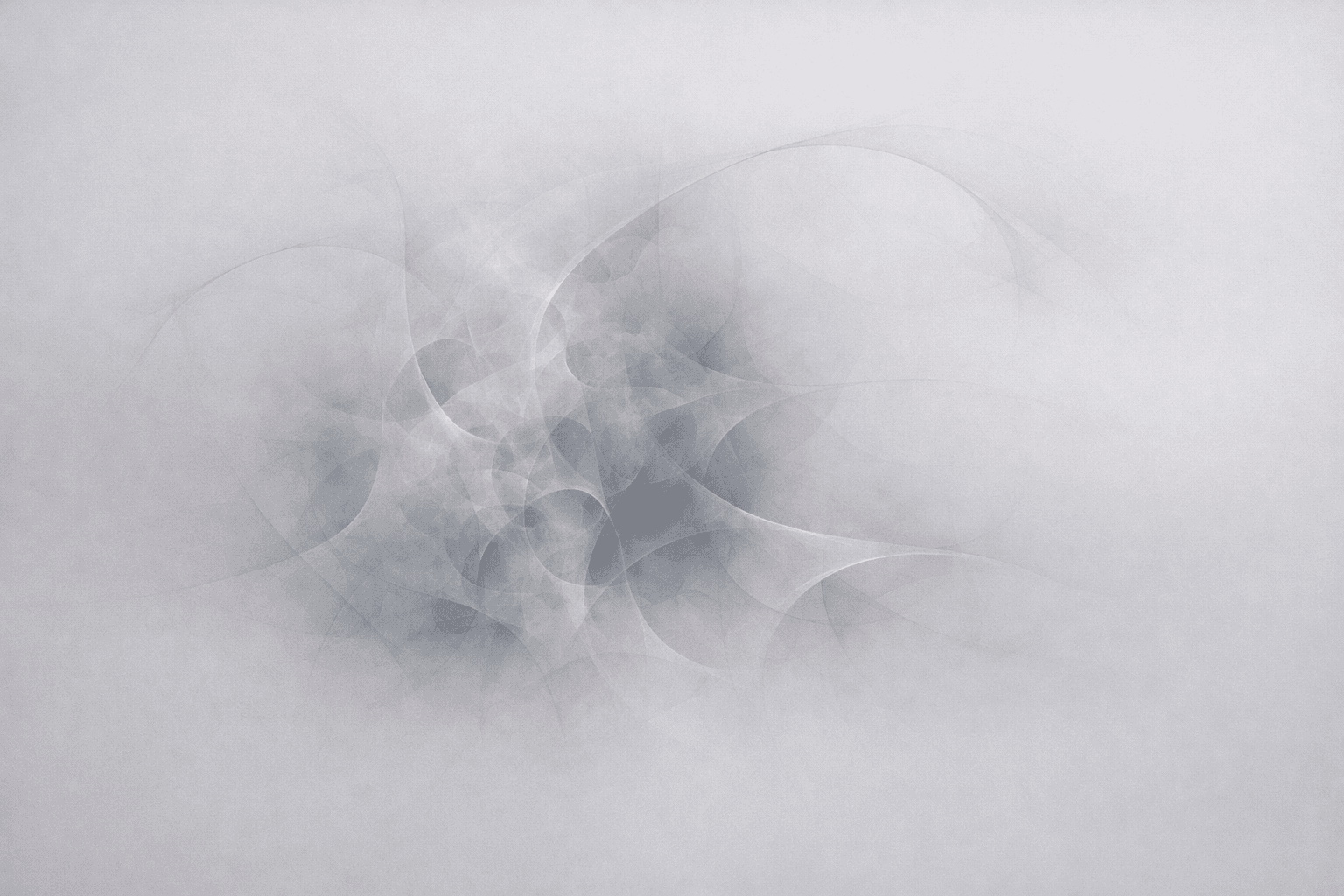
If emotions function as systems of states rather than linear feelings, then their representation must change accordingly. Verbal description alone is insufficient, not because it lacks nuance, but because it enforces sequence and categorization. Visual and structural forms offer a different capacity: they can hold multiplicity without resolving it, and display relationships without forcing them into narrative order. Visual representations—diagrams, fields, gradients, abstract geometries—are particularly suited to this task. They can show intensity without naming it, proximity without causality, and transition without direction. A visual form can register that two states coexist, overlap, or interfere, without demanding that one precede or explain the other. What matters is not interpretation, but relational placement. Structural representations operate in a similar way. Networks, topologies, and multidimensional models allow emotional states to be understood as configurations rather than events. They emphasize connections, weights, and zones of instability instead of causes and conclusions. In such representations, emotion appears not as something that happens, but as something that is arranged. This mode of representation preserves ambiguity without rendering it vague. Complexity remains legible because structure replaces narrative as the organizing principle. One can perceive patterns, densities, and tensions even when precise meanings remain undefined. The emotional system becomes observable without being simplified. Importantly, these representations do not aestheticize emotion in the decorative sense. Their value is not in visual appeal, but in structural fidelity. Elegance emerges not from ornamentation, but from coherence—the ability of a form to carry complexity without collapse. When successful, such representations make emotional states inhabitable rather than explainable. By shifting from description to structure, visual and formal representations enable a different relationship with emotion. They allow engagement without reduction, observation without detachment. Instead of asking what an emotion means, one can attend to how it is shaped, how it holds together, and how it might change. Emotion becomes something that can be perceived as a whole, even when its elements remain unresolved.
Emotion as Navigable Complexity
When emotion is understood as a system of states, the question shifts from interpretation to orientation. The goal is no longer to define what an emotion is, but to determine how one can exist within it without becoming disoriented. Emotional complexity does not require resolution in order to be meaningful; it requires the capacity to be navigated. Navigability does not imply control. It does not promise emotional mastery, clarity, or closure. Rather, it offers a way of remaining situated within dynamic internal conditions. By recognizing emotional states as structured fields—composed of tensions, transitions, and overlapping tendencies—it becomes possible to move within them without forcing them into fixed identities. Mapping emotional complexity allows for engagement without reduction. Instead of collapsing experience into a single label or narrative, one can perceive the contours of an emotional landscape: where intensity concentrates, where movement is constrained, where transformation is possible. This form of orientation does not eliminate uncertainty, but it renders uncertainty inhabitable. In this sense, emotional understanding becomes less about explanation and more about presence. To be present within an emotional system is to acknowledge its structure without demanding resolution. Complexity ceases to be an obstacle and becomes a condition of experience—something to be held rather than solved. Such an approach reframes emotion not as a problem to be interpreted, but as an environment to be navigated. It accepts that emotional life unfolds in multidimensional spaces where linear logic is insufficient, yet structure remains. Mapping does not replace feeling; it sustains it by providing orientation where language falls short. Ultimately, to treat emotion as navigable complexity is to recognize that understanding does not always take the form of answers. Sometimes it takes the form of maps—structures that do not explain where one should go, but make it possible to move without getting lost.